
Table of Contents
Summary
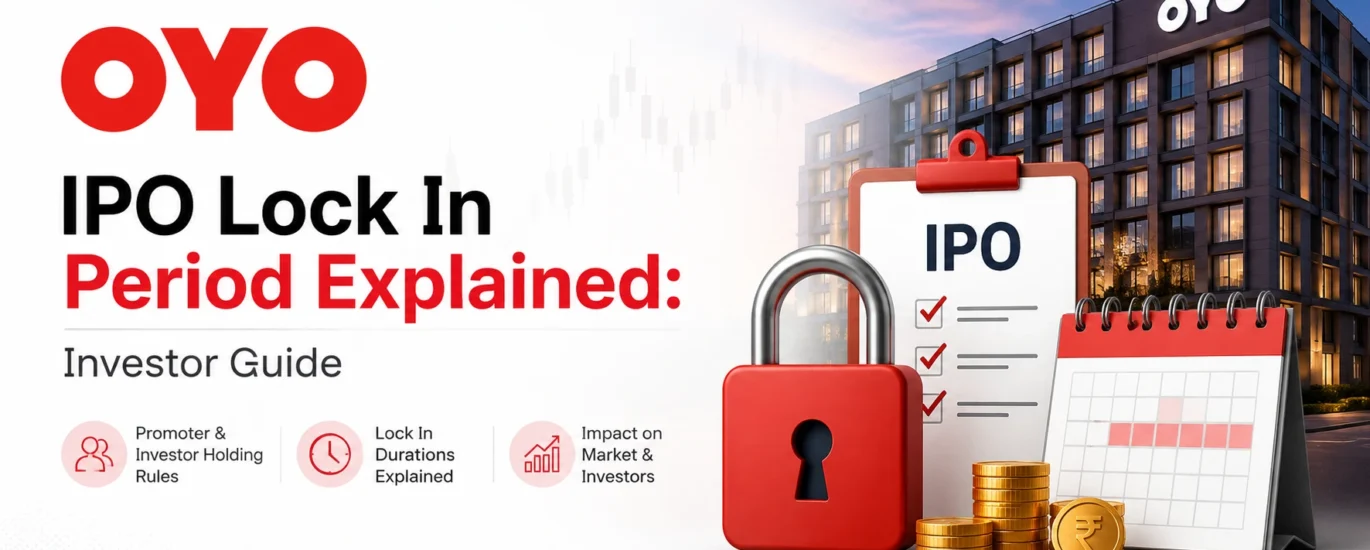
OYO’s IPO comes with three distinct locks in periods that most investors and even most financial websites tend to blur together. Promoters remain locked in for six to eighteen months, anchor investors unlock in two stages within the first ninety days, and pre-IPO investors, including foreign venture capital investors, can become eligible to sell in as little as six months under a SEBI rule that reduced this window from a full year.
Key Takeaways
OYO’s IPO carries three separate lock in categories, not one single rule.
The SEBI rule cutting FVCI lock in from one year to six months is the most overlooked detail in most coverage of this topic.
A lock in expiry is a tracking point for investors, not a signal to buy or sell.
Retail investor shares are never subject to lock in restrictions, regardless of what promoters or early backers do.
For live subscription numbers and listing day updates, keep checking Listing Updates as OYO’s IPO timeline progresses.
OYO IPO Lock In Period Explained: What Investors Should Know
If you are tracking OYO’s IPO closely, you have probably noticed something that most trackers never explain properly. Not every investor in OYO gets to sell their shares on the same day. Some are locked in for months, some for over a year, and a few can exit much sooner than people assume. This gap in understanding is exactly where most retail investors get confused, and where a lot of misplaced panic or excitement comes from once the stock actually lists.
This guide breaks down every lock in rule that applies to OYO’s IPO in plain language, including a lesser known SEBI rule that most financial websites skip entirely.
What Is a Lock In Period in an IPO
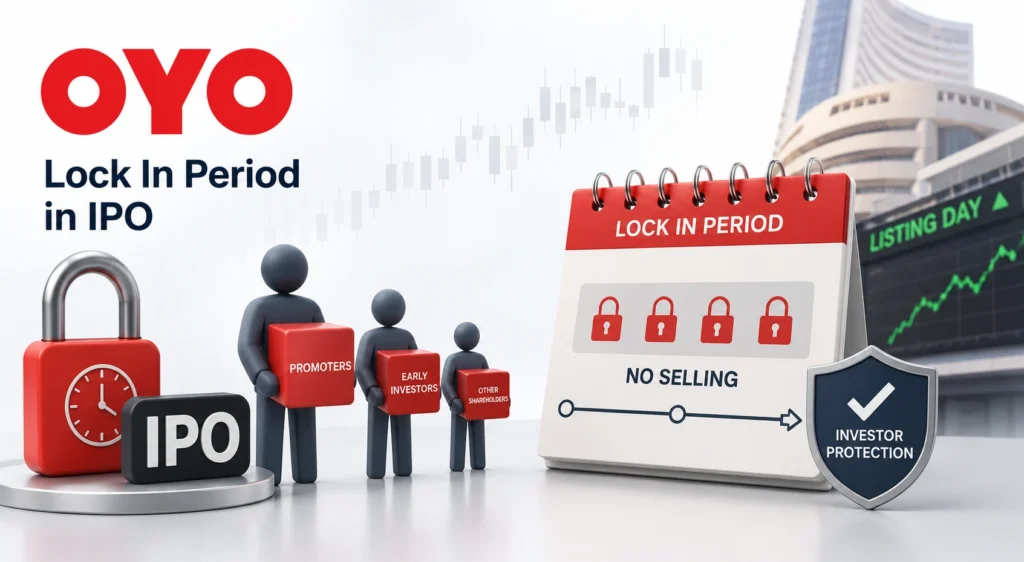
A lock in period is simply a fixed stretch of time during which certain shareholders cannot sell their shares after a company lists on the stock exchange. Think of it as a cooling off period. SEBI’s regulations exist so that big shareholders, like promoters or early investors, cannot dump their shares right after listing and crash the price for everyone else who just bought in.
Without lock in rules, a company could list, insiders could sell everything within days, and retail investors would be left holding shares in a stock with no real backing left behind it. The lock in period exists purely to protect market stability and investor trust.
Why Lock In Rules Matter More For OYO
OYO is not a first time IPO applicant. This is its third attempt at going public, after earlier plans in 2021 did not go through. Because of that history, investor confidence carries extra weight this time. When promoters and early backers agree to stay locked in for a set period, it signals that they believe in the company’s long term prospects rather than trying to cash out quickly. For a company rebuilding trust with the market, this detail matters more than it would for a routine listing.
The Three Types of Lock In That Apply to OYO
Most articles treat lock in as one single rule. In reality, there are three separate categories, each with its own timeline and its own group of shareholders.
Promoter Lock In
Promoters, meaning the founders and controlling shareholders, face the strictest rule. A portion of their holding, usually the minimum promoter contribution required by SEBI, stays locked in for eighteen months. Any additional shares they hold beyond that minimum are locked in for six months. This structure ties directly into how OYO plans to use its IPO proceeds, since promoter commitment often reflects confidence in that same growth plan.
Anchor Investor Lock In
Anchor investors are large institutional investors who commit money before the IPO opens to the general public. Their lock in works in two parts. Half of their allocated shares stay locked for thirty days, and the remaining half stays locked for ninety days. This staggered structure prevents a sudden flood of institutional selling right after listing, which is also worth watching alongside OYO’s Day 1 subscription numbers once bidding opens.
Pre IPO and Foreign Venture Capital Investor Lock In
This is the part almost no accessible content explains clearly, and it is genuinely important. SEBI amended its ICDR regulations to reduce the lock in period for shares allotted through pre IPO placements, including allotments to Foreign Venture Capital Investors, from one year down to six months. This shorter lock in applies when certain conditions are met, such as the shares being allotted a set period before the IPO documents were filed, and the allotment price not being lower than the final issue price.
In simple terms, SEBI brought this rule closer to how it treats Qualified Institutional Placements, making it easier and faster for early stage backers to exit once a company lists. For a company like OYO, which has had several rounds of pre IPO investment tied to its acquisitions and growth strategy, this rule can directly affect when a meaningful chunk of shares become tradable. You can see exactly where these clauses sit inside the offer document in our guide on reading OYO’s IPO documents.
Analysts who track SEBI’s regulatory changes point out that this shift was designed to make Indian IPO markets more attractive to foreign investors by aligning exit timelines with global norms. Market experts also note that while this improves liquidity for early investors, it means retail shareholders should pay closer attention to which investor category holds how much stock, rather than assuming all non promoter shares are locked for a full year.
OYO’s Lock In Timeline: Who Is Affected and When
Once OYO’s final RHP is available, the exact number of shares under each lock in category will be listed clearly. Broadly, you should expect to see three groups on the timeline.
Promoters, whose shares unlock in stages across six and eighteen months.
Anchor investors, whose shares unlock in the first thirty and ninety days after listing.
Pre IPO and foreign venture capital investors, whose shares can become tradable in as little as six months if the qualifying conditions are met.
Always cross check the final numbers against OYO’s official RHP filing, since exact figures can shift between the draft and final versions of IPO documents. For context on how OYO stacks up against a listed peer, see our OYO versus IHCL profitability comparison.
What Happens When the Lock In Period Ends
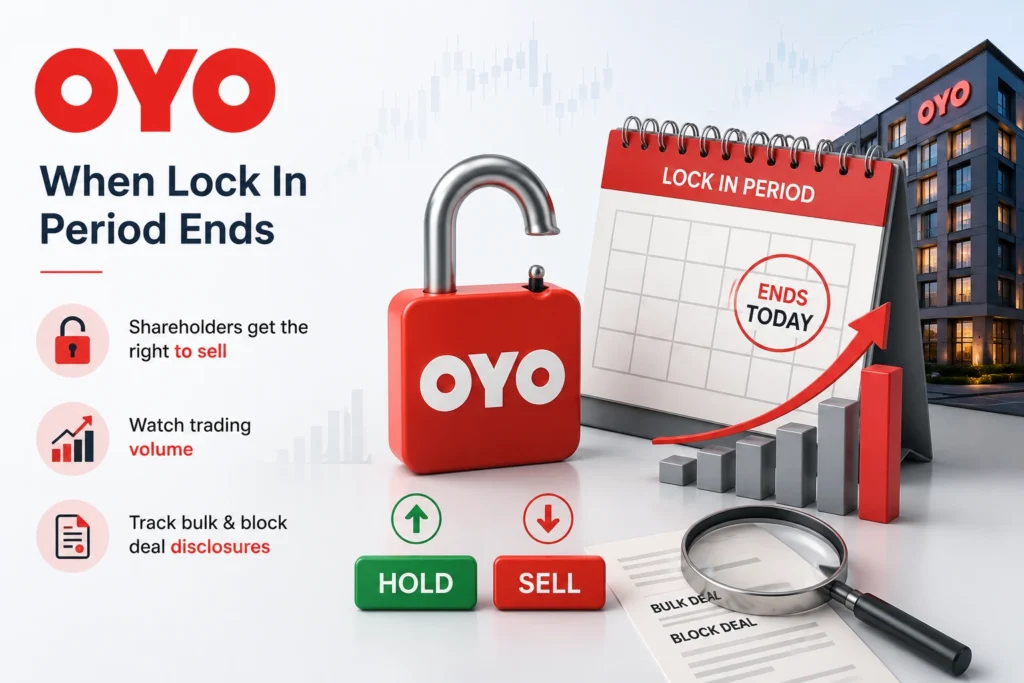
When a lock in period expires, it does not mean an automatic sell off. It simply means those shareholders now have the legal right to sell if they choose to. In many IPOs, some investors sell a portion of their holding around the expiry date, while others hold on for years.
What retail investors should actually watch for is trading volume around these dates, along with bulk deal and block deal disclosures on the stock exchange. A sudden spike in volume right after a lock in date often signals that a large shareholder has decided to exit part of their position. This is useful information to track, but it should never be treated as a buy or sell signal on its own, especially when weighed against OYO’s broader valuation picture.
How This Affects You as a Retail Investor
Here is something that gets misunderstood often. Lock in rules apply only to promoters, anchor investors, and pre IPO backers. If you buy OYO shares through the public IPO or later on the exchange, your shares are never locked in. You can sell whenever you want, based on your own decision.
What actually matters for you is staying aware of when large blocks of shares become tradable, since that can influence short term price movement. If you are still weighing whether OYO fits your portfolio, our guide on which IPO fits your investor profile is a good place to start. Keeping an eye on OYO’s lock in calendar, alongside its subscription numbers and listing day performance on our live IPO tracker, gives you a fuller picture before making any decision.
Frequently Asked Questions
What is the lock in period for OYO IPO shares?
OYO’s lock in period varies by shareholder type. Promoters face six to eighteen months, anchor investors face thirty to ninety days, and pre IPO or foreign venture capital investors can be locked in for as little as six months under SEBI’s updated rule.
Can retail investors sell OYO shares immediately after listing?
Yes. Lock in rules apply only to promoters, anchor investors, and pre IPO backers. Retail investors who buy shares through the IPO or the open market can sell anytime.
What is the SEBI rule on lock in for foreign venture capital investors?
SEBI reduced the lock in period for pre IPO placement shares, including those held by foreign venture capital investors, from one year to six months, subject to specific timing and pricing conditions under the ICDR regulations.
Does a lock in expiry mean investors will definitely sell their shares?
No. Expiry only removes the legal restriction. Whether a shareholder actually sells depends on their own decision, and this varies widely across companies and investors.
When does OYO’s promoter lock in expire?
The exact date depends on OYO’s listing date, since lock-in periods are counted from the day the stock lists on the exchange. Refer to OYO’s final RHP for the precise breakdown, or check our top IPOs to watch in 2026 for how OYO’s timeline compares to others in the pipeline.
Conclusion
OYO’s lock in period is not one single rule, and treating it that way is exactly why most investors misread it. Promoters stay committed for six to eighteen months, anchor investors unlock in stages across the first ninety days, and pre-IPO backers, including foreign venture capital investors, can become free to sell in as little as six months thanks to a SEBI rule that barely gets any coverage. Once you separate these three categories, the whole picture makes a lot more sense, and the timeline stops feeling like a mystery hidden in the fine print of the RHP.
For a company on its third attempt at going public, these lock in commitments carry more weight than usual. They are one of the signs of how much confidence promoters and early investors really have, in OYOs future plans. As an investor your own shares are never limited by any of this but knowing when these dates happen and what usually takes place around them puts you in a much better position than just watching the price go up and down without understanding the reason.
Keep this page bookmarked as OYO’s listing date gets closer, since the exact lock in dates will only be confirmed once the final RHP and listing details are out. We will update this guide the moment that happens.