
Table of Contents
Summary
OYO’s IPO is fundamentally a debt repair story. The company paid ₹1,089 crore in interest costs in just nine months of FY26, more than its entire real operating profit, which explains why ₹4,987.5 crore of its ₹6,650 crore fresh issue is going straight into repaying borrowings at its Singapore subsidiary. But this article uncovers a crucial detail most coverage misses, that 75 percent of proceeds only clears about 64.3 percent of OYO’s outstanding term loan, meaning real debt remains after the IPO. It also traces the debt’s full history, from its 2021 Deutsche Bank origins through its connection to the G6 Hospitality acquisition, and explains what credit rating upgrades actually mean for investors evaluating this listing.
Key Takeaways
- OYO is in debt, and reducing that debt is one of the primary objectives of its IPO, with the debt tied to a five year term loan facility arranged by Deutsche Bank in 2021
- Paying down debt reduces interest costs and strengthens the balance sheet before pursuing further growth, which is why the IPO includes no dedicated allocation for capital expenditure or expansion
- OYO’s finance costs came to ₹1,089 crore for just the first nine months of FY26, an amount larger than the company’s entire reported profit for the same period
- ₹4,987.5 crore of the ₹6,650 crore fresh issue is earmarked to repay borrowings at OYO’s Singapore subsidiary, Oravel Stays Singapore Pte Ltd
- This repayment covers only about 64.3 percent of OYO’s outstanding Term Loan B facility, meaning real debt will still remain on the company’s books even after the IPO closes
- A make whole premium for early loan prepayment adds an additional real cost, paid from existing cash rather than IPO proceeds, a detail most coverage of this IPO overlooks
- Part of OYO’s current debt is directly connected to the Deutsche Bank financing that helped fund the $525 million G6 Hospitality acquisition in 2024
- OYO has been actively working to reduce this debt for years, including a $195 million buyback in 2023 and a ₹1,620 crore prepayment that brought the facility down from $660 million to around $450 million
- Credit rating agencies including Fitch and Moody’s have upgraded OYO’s outlook as profitability improved, but ratings in this range remain speculative grade rather than investment grade
- OYO once withdrew an earlier IPO filing specifically to refinance this same debt through dollar bonds, showing debt management has directly shaped its path to public markets for years
Introduction
OYO paid ₹1,089 crore in interest costs in just the first nine months of FY26. That single number is bigger than a large chunk of the profit the company reported for the same period. Once you see that comparison, the real reason behind OYO’s IPO structure becomes obvious.
Is OYO in debt? Yes, and reducing that debt is one of the primary objectives of its IPO. But here is the detail most coverage of this IPO leaves out. The 75 percent of proceeds going toward debt repayment does not actually clear the debt completely. This article walks through exactly how much OYO owes, where that debt came from, why the company is prioritizing debt repayment over expansion, and what will still be left on its books even after the IPO closes.
Is OYO in Debt? The Short Answer
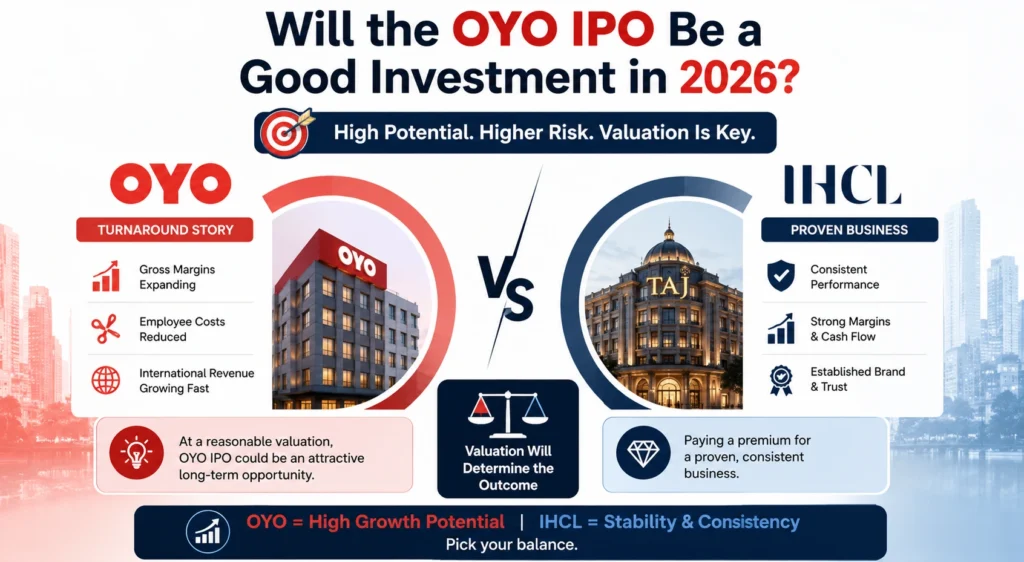
OYO wants to reduce its debt. That is one of the main goals of its initial public offering. The debt of OYO is connected to a loan that Deutsche Bank arranged in 2021. This loan is for five years. OYO had to pay a lot of money as interest on this debt. ₹1,089 Crore.. This was just, for the nine months that ended in December 2025. This is a big amount of money. The initial public offering of OYO looks the way it does because of this debt. OYOs debt is an issue and reducing OYOs debt is very important.
Where This Debt Actually Came From
This debt did not appear overnight, and understanding its history helps explain why paying it down has become such a central part of OYO’s IPO story.
The core facility traces back to 2021, when OYO arranged a large term loan through Deutsche Bank. Around the same time, OYO’s Singapore subsidiary also worked through an earlier round of debt, repaying a $430 million loan back to SoftBank’s UK investment entity, as the company restructured its finances during a difficult period for the travel industry.
The debt story picks up again a few years later. As we covered in our breakdown of how OYO makes money through growth and acquisitions, Deutsche Bank separately arranged a new term loan facility specifically to help finance OYO’s $525 million acquisition of G6 Hospitality, the parent company of Motel 6 and Studio 6, in late 2024. So part of the debt OYO is repaying today is directly connected to the very acquisition that has been driving its international growth.
Along the way, OYO has made real efforts to shrink this debt pile on its own. The company bought back $195 million of debt in November 2023, and later prepaid ₹1,620 crore through a buyback that brought its outstanding Term Loan B down from $660 million to around $450 million. This is not a company ignoring its debt problem, it is one that has been chipping away at it for years, and the IPO is the biggest step yet in that same direction.
Why Is OYO Using 75% of Its IPO Proceeds to Repay Debt Instead of Expanding?
Paying down debt reduces interest costs and strengthens the balance sheet before pursuing further growth.
Of the ₹6,650 crore fresh issue OYO’s parent company Prism is raising, ₹4,987.5 crore is being directed specifically into OYO’s Singapore subsidiary, Oravel Stays Singapore Pte Ltd, to repay or prepay its existing borrowings. The remaining funds are capped at 25 percent of gross proceeds and will go toward general corporate purposes.
What is notably missing from this list is any dedicated allocation for capital expenditure, new market expansion, or technology investment. This tells you exactly what OYO’s leadership is prioritizing right now. Rather than raising money to chase aggressive new growth, the company is using its public listing to clean up a balance sheet that has been carrying meaningful interest costs for years. Lower debt means lower interest payments, which directly improves how much of OYO’s operating profit actually reaches the bottom line, something that matters even more once you understand how much of OYO’s headline profit already comes from one time items, which we explained fully in our piece on OYO’s PAT growth in 9MFY26.
The Detail Almost Nobody Is Telling You: 75% Doesn’t Mean Debt Free
Here is where this article goes further than most of the coverage currently available.
The ₹4,987.5 crore being used for debt repayment covers roughly 64.3 percent of OYO’s outstanding Term Loan B facility, not all of it. That means even after this IPO closes and the debt repayment is complete, OYO will still be carrying a real, meaningful amount of debt on its books. The 75 percent figure refers to the share of IPO proceeds going toward debt, not the share of total debt being eliminated, and those are two very different things.
There is another cost worth understanding here too. When a company repays a loan early, lenders sometimes charge what is called a make whole premium, essentially compensation for the interest income they are losing out on by getting repaid ahead of schedule.
This cost is an extra amount of money that comes with paying off OYOs debt early and it is important to know that this cost is being covered using the money that OYO already has not the money from the IPO. Few reports about this IPO explain this clearly but it is important because it shows that the real cost of fixing the balance sheet is a bit more than the main number of ₹4,987.5 crore suggests.
Interest Costs vs Profit: Putting the Debt in Real Perspective
Numbers become much easier to understand when you put them side by side.
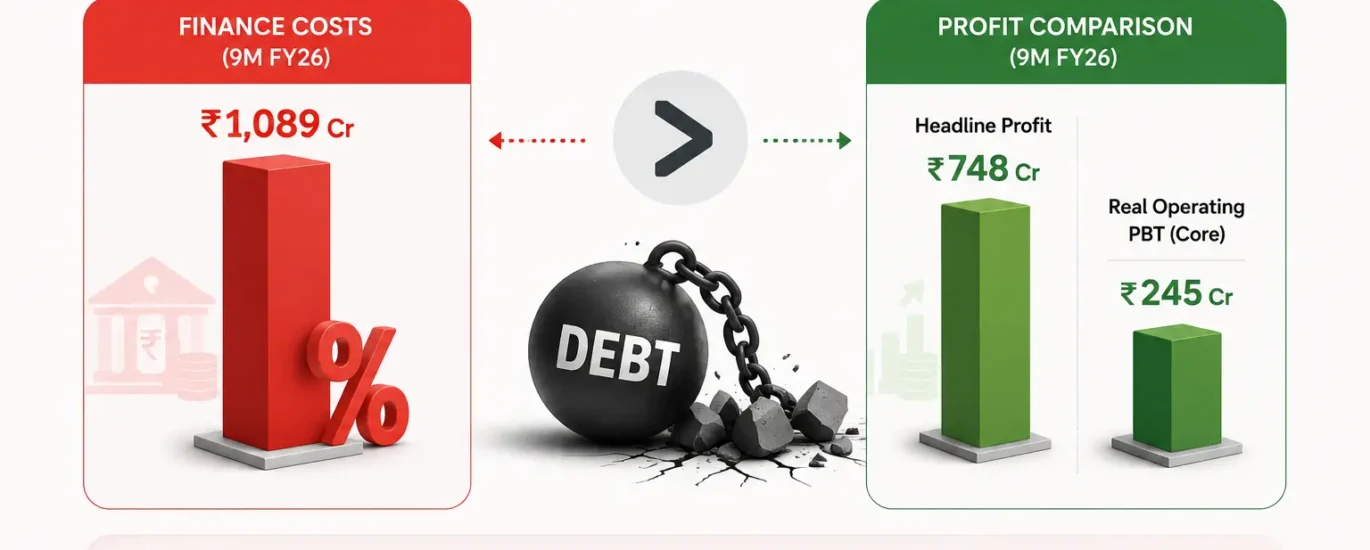
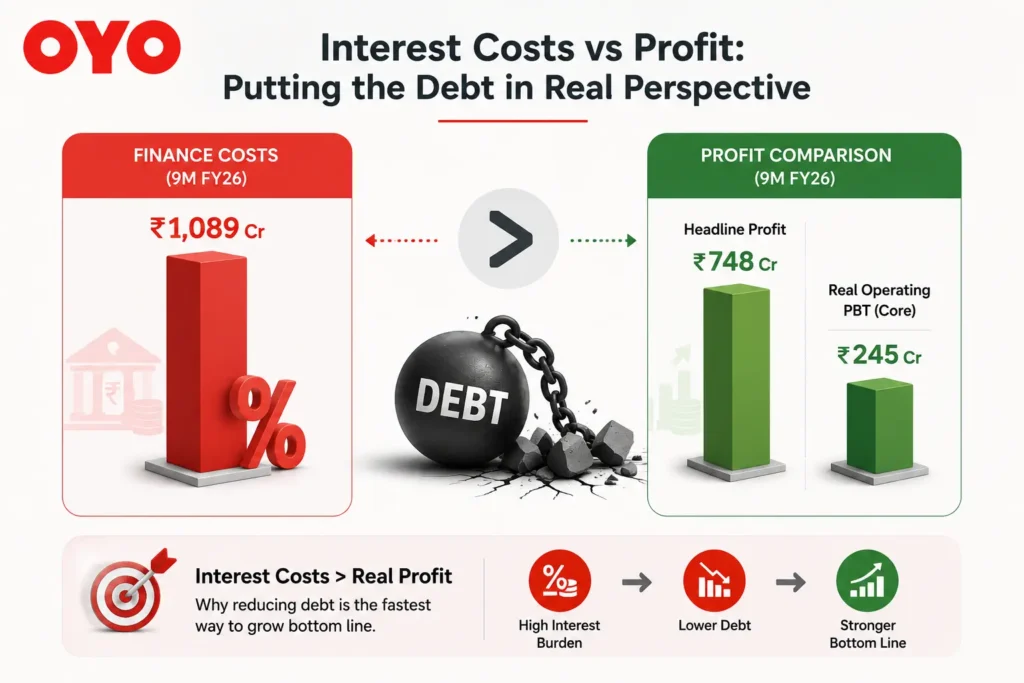
OYO’s finance costs came to ₹1,089 crore for the first nine months of FY26. In that same period, the company reported a headline profit of ₹748 crore. Interest costs alone were larger than the entire reported profit for the period.
It gets more revealing when you remember something else. As we explained in detail in our PAT growth article, a large chunk of that ₹748 crore headline profit came from a deferred tax credit and a one time subsidiary stake sale, not from core operations. Once you strip those out, OYO’s real, repeatable profit before tax for the same nine months was closer to ₹245 crore. Compare that to the ₹1,089 crore interest bill, and you can see clearly why reducing debt is not just a nice to have for OYO, it is one of the most direct ways the company can actually grow its bottom line without needing revenue to grow at all.
What a Credit Rating Upgrade Actually Means Here
You may come across headlines mentioning that credit rating agencies have upgraded OYO’s outlook, and it is worth understanding what that actually means before assuming it settles the debt question.
Moody’s assigned Oravel Stays its first ever corporate family rating of B3 back in 2021, when the company was raising debt to service its existing loans ahead of an eventual listing. Since then, as OYO’s operating performance has improved, Fitch upgraded its rating on OYO’s term loan facility from B minus to B, citing improving EBITDA leverage and the company’s ongoing debt buybacks as reasons for the improved outlook.
This is genuinely good news, but it needs honest context. Ratings in the B range, even after an upgrade, are still considered speculative grade rather than investment grade. In plain terms, agencies still view this debt as carrying real risk, just less risk than before. An upgrade is a sign of real progress, not a signal that the debt question has been fully resolved.
The IPO That Almost Didn’t Happen This Way
OYO’s relationship with debt has shaped its IPO journey for years, not just in this current filing.
Back in 2021, OYO was reportedly aiming for an IPO at a valuation of around 12 billion dollars, a plan that never materialized as the pandemic and its aftermath forced the company to focus on survival and restructuring instead. Years later, OYO even withdrew an earlier draft prospectus specifically so it could refinance a portion of this same debt through dollar bonds, a move projected to save the company between 8 and 17 million dollars a year in interest costs once complete. That refinancing effort alone shows how directly debt management has influenced when and how OYO has approached the public markets.
What’s Left After the IPO
Once this IPO closes and the ₹4,987.5 crore debt repayment goes through, OYO’s balance sheet will genuinely be in a healthier position than it is today. Interest costs should drop meaningfully, which directly benefits future profitability. But this is not the finish line for OYO’s debt story. Some debt will remain, the make whole premium adds a real additional cost paid separately from cash on hand, and the company will still need to keep managing its remaining obligations carefully in the years ahead.
The honest way to think about this IPO is as a step toward better money health, not the final solution. OYO is choosing to go into markets with a lighter and more lasting balance sheet instead of a completely perfect one and that difference is important, for anyone thinking about investing.
Frequently Asked Questions
Is OYO in debt?
Yes, and reducing that debt is one of the primary objectives of its IPO. The debt is tied to a five year term loan facility from Deutsche Bank, and OYO paid ₹1,089 crore in finance costs on it in just nine months of FY26.
Why is OYO using 75% of its IPO proceeds to repay debt instead of expanding?
Paying down debt reduces interest costs and strengthens the balance sheet before pursuing further growth. The IPO includes no dedicated allocation for capital expenditure or market expansion, showing that balance sheet repair is the clear priority right now.
Will OYO still have debt after the IPO?
Yes. The ₹4,987.5 crore being repaid covers only about 64.3 percent of OYO’s outstanding term loan facility, meaning a real amount of debt will remain on the company’s books even after the repayment is complete.
How much interest does OYO pay on its debt?
OYO’s finance costs came to ₹1,089 crore for the first nine months of FY26 alone, an amount larger than the company’s entire reported profit for the same period.
Is OYO’s credit rating good?
It has improved, with Fitch upgrading OYO’s term loan rating from B minus to B as profitability grew. However, ratings in this range are still considered speculative grade rather than investment grade, so the debt still carries real risk even after the upgrade.
Conclusion
OYO’s IPO is, at its core, a balance sheet repair story rather than a growth funding one. The company is using three quarters of its fresh issue to chip away at debt that has been costing it more in annual interest than its entire real operating profit, and that alone tells you everything about what this listing is really trying to fix. It is real, meaningful progress, but it is not a complete solution, since a real share of this debt and an added prepayment cost will still exist even after the IPO closes. For a fuller picture of how this debt story connects to OYO’s overall profitability, read our detailed look at OYO’s PAT growth in 9MFY26, and for the acquisition that helped create part of this debt in the first place, see our breakdown of how OYO makes money through its growth strategy and acquisitions.
This article will be updated once OYO’s final RHP confirms the exact debt repayment figures and price band. For more coverage like this as OYO’s IPO moves forward, keep following Listing Updates.